
Moissanite vs. Lab Diamond: Which Reflects Your Personal Quiet Luxury?
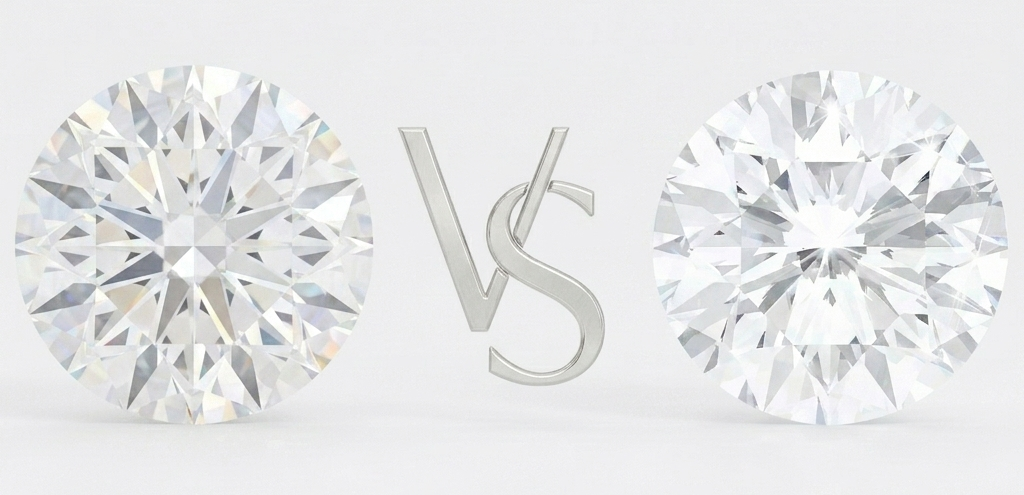
In an era where luxury is defined by intentionality rather than just a price tag, the modern woman faces a sophisticated dilemma. You seek pieces that resonate with your values, sustainability, brilliance, and a “quiet luxury” aesthetic that feels at home from the boardroom to a weekend gallery opening. When building a curated jewelry collection, the question inevitably arises: Moissanite vs. Lab Diamond, which one truly belongs on your finger?
The shift toward lab-grown stones isn’t just a trend; it is a movement toward transparency. However, while both stones offer a conflict-free path to elegance, they interact with light and life in fundamentally different ways. This guide cuts through the technical jargon to help you choose the stone that mirrors your unique brilliance.
The Definitive Guide to Choosing Your Daily Sparkle
Understanding the technical nuances of these stones is the first step in making a choice that you’ll love every time you glance at your hand.
Featured Snippet: What is the main difference between Moissanite and Lab Diamonds?
The primary difference is chemical composition and light performance. Lab diamonds are 100% carbon and optically identical to mined diamonds. Moissanite is silicon carbide, offering significantly more “rainbow” fire and a higher refractive index, making it more colorful and more affordable than a lab diamond.
Quick Comparison: Performance & Value
| Feature | Lab-Grown Diamond | Modern Moissanite |
| Chemical Identity | Pure Carbon (Identical to Mined) | Silicon Carbide (Unique Mineral) |
| Hardness (Mohs) | 10 (Maximum) | 9.25 (Extremely Durable) |
| Refractive Index | 2.42 (Classic Brilliance) | 2.65 – 2.69 (Maximum Fire) |
| Visual Signature | Icy, deep, white-light sparkle | Vibrant, rainbow-colored flashes |
| Price Point | Premium (but 60% less than mined) | Accessible (High-value luxury) |
1. Visual Performance: Icy Elegance vs. Fiery Brilliance
At Larisénte, we focus on “Quiet Brilliance.” But brilliance isn’t a one-size-fits-all concept.
The Lab Diamond Aura
A lab diamond delivers what we call “scintillation”, that classic, sharp, white-and-grey contrast that defines high-end jewelry. It has a depth that draws the eye inward. If your style leans toward the Quiet Luxury aesthetic, think silk slips, structured blazers, and monochromatic palettes, the lab diamond’s understated elegance is your perfect match.
The Moissanite Fire
Moissanite is a “fire” stone. Because its refractive index is higher than a diamond’s, it splits light into a spectrum of colors. In sunlight, it creates a “disco ball” effect. For the woman who wants her jewelry to be a focal point and loves a vibrant, energetic glow, moissanite offers a level of radiance that even the finest diamonds cannot reach.
2. Durability: Built for the “Daily Wear” Professional
You shouldn’t have to “save” your jewelry for special occasions. Both stones are engineered for longevity, but their physics differ slightly.
- The 10/10 Hardness: Lab diamonds are the hardest material on Earth. They are immune to surface scratches from everyday objects like keys or zippers.
- The Resilient Alternative: Moissanite, at 9.25, is harder than sapphire or ruby. It is incredibly tough. While a diamond is harder to scratch, moissanite is actually less likely to chip because it lacks the “cleavage planes” (internal weak points) found in diamonds.
Expert Jewelry Tip: If you work with your hands or lead an active lifestyle, consider a Bezel Setting for your Moissanite or Lab Diamond. It protects the edges of the stone while maintaining that sleek, modern Larisénte look.
3. The Truth About “Value” in 2026
The old-school narrative was that diamonds were the only “real” investment. Today’s 25-40-year-old professional knows better. We invest in experiences, sustainability, and personal joy.
Choosing Moissanite vs. Lab Diamond is a strategic lifestyle choice. A 2-carat lab diamond allows you to own a masterpiece for a fraction of the cost of a mined stone. Choosing moissanite, however, allows you to reallocate that budget into higher-quality 18k solid gold settings or perhaps a full suite of matching earrings and necklaces.
This is the essence of Smart Luxury: obtaining the highest visual impact and ethical peace of mind without the “mined-stone markup.
4. How to Choose: The Larisénte Persona Test
Still undecided? Match your personality to the stone:
Choose a Lab Diamond if:
- You value the biological and chemical “perfection” of a diamond.
- You want a stone that looks identical to an heirloom passed down through generations.
- You prefer “white light” reflections over “rainbow” flashes.
Choose Moissanite if:
- You are a “Maximalist in Sparkle”, you want the most brilliance possible.
- You are highly eco-conscious and love the idea of a stone originally discovered in a meteorite.
- You believe jewelry should be accessible, fun, and high-impact.
- Beyond the Sparkle: The Ethical Choice
Both stones represent a victory for the Conscious Minimalist. By opting for lab-grown, you are ensuring your jewelry is 100% conflict-free. At Larisénte, we believe the story behind the stone is just as beautiful as the light it reflects. When you wear our pieces, you aren’t just wearing a gem; you are wearing a commitment to a cleaner, more ethical future for the jewelry industry.
Frequently Asked Questions (FAQ)
Q1: Does moissanite look “fake” next to a diamond?
Not at all. In sizes under 1.5 carats, the stones are virtually indistinguishable to the naked eye. In larger sizes, moissanite’s “fire” becomes more obvious. To keep the look as close to a diamond as possible, we recommend “Colorless” (D-E-F) moissanite in a Round or Emerald cut.
Q2: Will moissanite get cloudy over time?
Never. Moissanite is a stable mineral that does not absorb oils or chemicals in a way that causes permanent cloudiness. A simple cleaning with warm soapy water will restore its original brilliance instantly.
Q3: Is a lab diamond a “real” diamond?
Yes. Every physical, chemical, and optical property is identical to a mined diamond. Even a professional gemologist cannot tell the difference with a loupe; it requires specialized laboratory equipment to detect the growth patterns.